Budget and prices
What a mirrorless kit really costs in its first year
The body price is about two thirds of year one. Here is the arithmetic for shipping, duty, sales tax, batteries and cards, with every step shown.
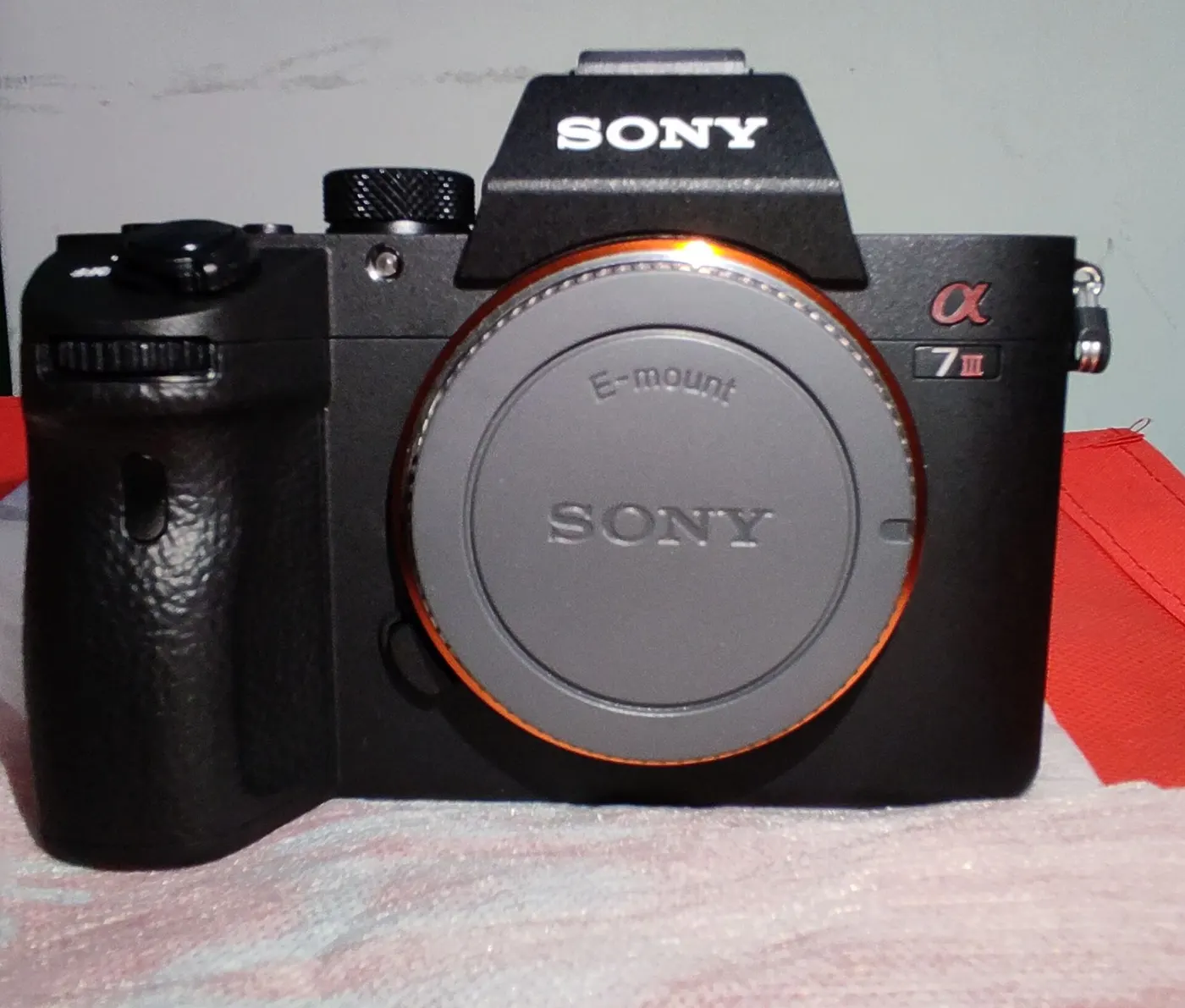
Most camera budgets are set by the body price and then quietly broken by everything that has to arrive with it. Shipping, duty, sales tax, two more batteries, two cards and something to carry it in are not optional extras: they are the difference between a kit you can use for a day and a body you can use for 300 frames.
This guide puts a number on each of them and shows the arithmetic. The figures are a worked example with a check date of 2026-11-03, not a quote, and this site carries no live prices.
The landed cost, step by step
If you buy from abroad, the price on the listing is the start of the sum, not the end. The landed cost calculator on this site uses the order customs actually uses: duty is charged on the item price, and tax is charged on item price plus shipping plus duty.
Work a $620 used body with $45 shipping at an assumed 2.5% duty rate. Duty is $620 × 0.025 = $15.50. The tax base is $620 + $45 + $15.50 = $680.50, and at an assumed 8% sales-tax rate that is $54.44. The landed cost is $734.94. Sales tax in the United States is set by state and locality rather than nationally, so the rate in that last step is the one that changes most between two buyers of the same camera.
The duty-free route that used to cover small parcels is no longer there. U.S. Customs and Border Protection states that the suspension of de minimis applies to merchandise valued at $800 or less arriving via all modes, including the international postal network, and that all applicable duties, taxes and fees must be paid based on classification, country of origin and dutiable value. Shipments valued at $2,500 or less generally still qualify for informal entry, and CBP is explicit that it holds the importer — you — liable for the duty, not the seller.
| Line | Arithmetic | Amount |
|---|---|---|
| Item price | listing price | $620.00 |
| Shipping | quoted by the seller | $45.00 |
| Duty at an assumed 2.5% | $620 × 0.025 | $15.50 |
| Sales tax at an assumed 8% | ($620 + $45 + $15.50) × 0.08 | $54.44 |
| Landed cost | sum of the four lines above | $734.94 |
The duty and tax rates here are assumptions entered into the calculator, not a customs ruling and not your state's rate. Change either one and only the last two rows move.
What has to arrive with the body
A camera that shoots 300 frames per charge and ships with one battery is a half-day camera. Two spares at $35 each is $70. Two memory cards at $30 each is $60, and the second card matters more than its price suggests, because a single card is a single point of failure for a whole day's work. A bag that actually closes over the kit is another $55.
That is $185 on top of a $734.94 landed cost, for a first-year outlay of $919.94. The body's $620 listing price is 67% of that total, and its landed cost is 80%. Budgets built on the listing price alone are short by about a third, which is why the first year feels more expensive than the decision you thought you made.
Spread over 5 years with an assumed $400 resale at the end, the same kit is ($919.94 − $400) ÷ 5 = $103.99 a year, or just under $104. That is the figure worth comparing against a rental, a phone upgrade, or simply keeping what you own.
| Line | Amount | Share of year one |
|---|---|---|
| Landed cost of the body | $734.94 | 80% |
| Two spare batteries at $35 | $70.00 | 8% |
| Two memory cards at $30 | $60.00 | 7% |
| Bag | $55.00 | 6% |
| First-year total | $919.94 | 100% |
Shares are rounded to whole percentages and therefore sum to 101%. Over 5 years with an assumed $400 resale, the same total is about $104 a year.
Buying used, and what the price index says about waiting
Camera equipment is one of the few consumer categories whose official price index has been falling. In the U.S. Bureau of Labor Statistics consumer price index, photographic equipment and supplies fell 0.8% over the 12 months to September 2026, while recreation commodities as a whole rose 3.6% and information technology commodities fell 2.9%.
A 0.8% annual drift is not a reason to wait. On a $735 landed body it is about $6 a year, which is less than the cost of two batteries and far less than a year of not taking the pictures. The used market moves much faster than the index: a body typically takes its largest single drop when its successor is announced, and that is an event you can watch for rather than a trend you can wait out.
Where the index is useful is as a sanity check on a seller's framing. A listing describing a four-year-old body as holding its value is arguing against a falling category index, and the completed-sale prices for that exact model will settle it in a minute.
- Photographic equipment and supplies: −0.8% over the 12 months to September 2026 (BLS CPI)
- Information technology commodities: −2.9% over the same 12 months
- Recreation commodities: +3.6% over the same 12 months
- On a $735 body, a 0.8% annual drift is about $6 a year
The costs that only appear in year two
Storage is the one most budgets miss. A 24-megapixel raw file is roughly 28 MB, so 8,000 frames a year is about 224 GB, and a backup copy doubles it. Two external drives bought at $70 each and replaced every 4 years is $35 a year, and that is before any cloud subscription.
A sensor clean is the other. A professional clean runs around $60 and most domestic users need one every year or two, so call it $40 a year on average. Add the $35 of storage and the kit costs about $75 a year to run before any lens is bought, which is roughly 72% of the $104 a year the hardware itself costs on the example above.
Neither number is dramatic on its own. Together they are the reason the second year of ownership costs more than people expect, and they are easy to plan for because both are scheduled rather than random.
Before you buy
- Write the listing price, shipping, duty rate and your own state and local sales-tax rate into the landed cost calculator before you commit
- Confirm whether the seller is shipping from inside the United States, since that removes the duty line entirely
- Budget two spare batteries and a second memory card as part of the purchase, not as later extras
- Ask any used seller for the shutter count and compare it with the model's rated life
- Price two external drives and a yearly sensor clean into your second-year budget
- Check completed sale prices for the exact model rather than asking prices
Questions readers ask
- Does the $800 duty-free allowance still apply to a camera bought abroad?
- No. CBP states that the suspension of duty-free de minimis treatment applies to merchandise valued at $800 or less arriving via all modes, including the international postal network, and that applicable duties, taxes and fees must be paid. Bona fide gifts and goods accompanying a traveller are covered by separate provisions of the same statute.
- Who pays the duty if the seller ships it?
- You do. CBP puts it plainly: it holds the importer, not the seller, liable for payment of duty. A courier will usually advance the amount and bill you on delivery, often with a brokerage fee on top, so the invoice arrives after the camera does and is not included in the price you agreed.
- How much should I budget for a second body?
- Price it as a half kit rather than a whole one, since batteries, cards and bag are already bought. On the example above that removes $185 from the first-year figure, leaving the landed cost alone. A second body earns its place when a lens change in the middle of an event costs you pictures, not when it merely feels safer.
- Is an extended warranty worth it on a used body?
- Compare the premium with the repair it covers. A shutter replacement is commonly a few hundred dollars, and a three-year plan at $120 is worth it only if you believe the chance of that failure is above about 40% over the period. On a body with a documented low shutter count, it rarely is.
Sources
- U.S. Bureau of Labor Statistics — Consumer Price Index, Table 2, 12-month percent changes to September 2026 — checked 2026-11-03
- U.S. Customs and Border Protection — Internet purchases: who pays duty, informal and formal entry thresholds — checked 2026-11-03
- U.S. Customs and Border Protection — E-commerce FAQs on the suspension of duty-free de minimis treatment — checked 2026-11-03
Some links on this site can earn us a commission. That does not change which product a guide recommends, and it adds nothing to your price. Advertising is not enabled on this site yet. When it is, ads will be labelled and kept visually separate from the guides.