How to choose
Body or lens: which upgrade actually changes your pictures
A camera body and a lens do not last the same number of years. Work out cost per year for each before deciding which half of the kit to replace.
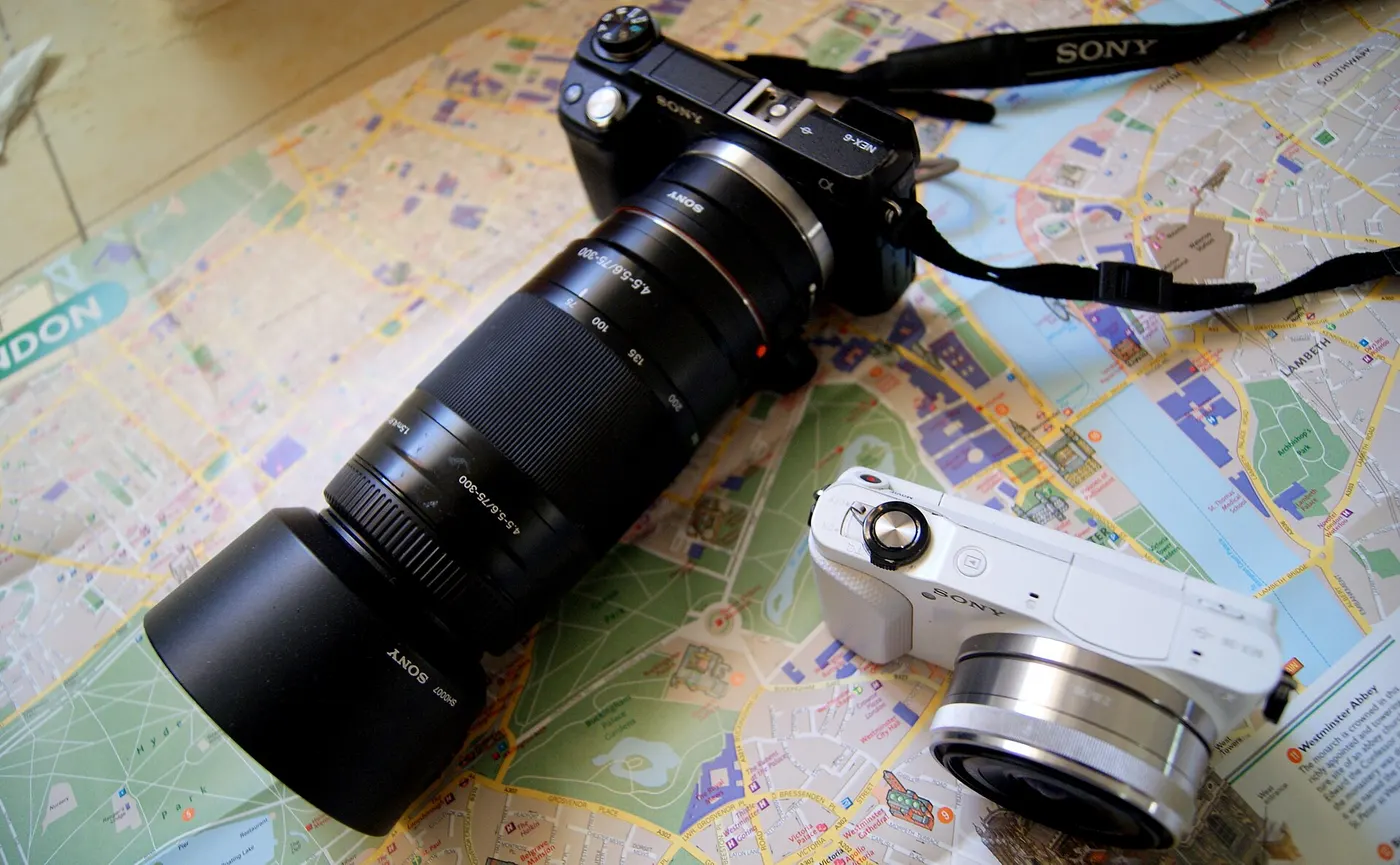
The upgrade question is almost never 'is this camera better'. It is 'which half of my kit is limiting the picture, and how many years will the money I spend stay useful'. Those are two different questions and they have two different arithmetic answers.
This guide works through both. Every price below is a worked example with the arithmetic shown, not a quote for a particular product, because this site has no price feed and runs no tests. Put your own figures into the cost per year calculator and the ranking usually holds.
The two halves of a camera age at different speeds
A body is a computer with a shutter attached. Its sensor, processor and autofocus are the parts that date, and the used market prices them accordingly. A lens is glass in a metal barrel: the optical formula does not get slower, and a mount that is still in production keeps the lens sellable. That difference is the whole argument, and it shows up as soon as you divide price by the years you will keep each item.
Take a $1,500 upgrade budget. Spent entirely on a body kept 4 years and sold on for $600, it costs ($1,500 − $600) ÷ 4 = $225 a year. Spent on a $1,100 prime kept 10 years and sold for $700, the lens costs ($1,100 − $700) ÷ 10 = $40 a year. Those are the same dollars buying very different amounts of time.
The third row is the one most people actually want: a used body at $400 alongside the $1,100 lens. The body contributes ($400 − $150) ÷ 4 = $62.50 a year, the lens $40, for about $103 a year in total. That is less than half the cost per year of the body-only option, and it is the combination that changes the picture, because the lens decides how much light reaches the sensor and how the out-of-focus area is drawn.
| What you buy | Price | Years kept | Assumed resale | Cost per year |
|---|---|---|---|---|
| New body only | $1,500 | 4 years | $600 | $225 |
| Fast prime lens only | $1,100 | 10 years | $700 | $40 |
| Used body plus that prime | $400 + $1,100 | 4 and 10 years | $150 + $700 | about $103 |
Each figure is (price − resale) ÷ years, the same formula the cost per year calculator on this site uses. Resale values are assumptions you should replace with completed sale prices for your own mount.
What the published specification actually promises
Two numbers on a spec sheet are measured to a common method, which makes them comparable between brands: shots per charge and stabilisation in stops. CIPA, the Camera & Imaging Products Association, publishes DC-002, the Standard Procedure for Measuring Digital Still Camera Battery Consumption, in its 2020 translation, and DC-011, the Measurement and Description Method for Image Stabilization Performance of Digital Cameras, revised in 2024.
That matters because it tells you what to do with the number rather than whether to trust it. If a body is rated at 300 shots per charge and your usual day is 900 frames, you need 3 batteries or a power bank, and that is a $140 line in the upgrade you were about to make. The rating is a measurement, not a promise about your day: live view, long exposures and continuous autofocus all draw more than the test sequence.
Stabilisation in stops works the same way. A 5-stop figure means the standard's test rig found a shutter speed five stops slower still produced an acceptable result on average. It says nothing about a moving subject, which needs shutter speed rather than stabilisation, so a sports photographer gains little from the figure and a hand-held architecture photographer gains a great deal.
- Read the shots-per-charge figure, divide your typical frame count by it, and round up: that is your battery count
- Treat stabilisation stops as a static-subject number and ignore it for anything that moves
- Check the sensitivity and resolution figures are quoted under a named standard rather than a marketing phrase
- Write down the two numbers for each candidate body before you look at any price
The mount decides what you can still buy in five years
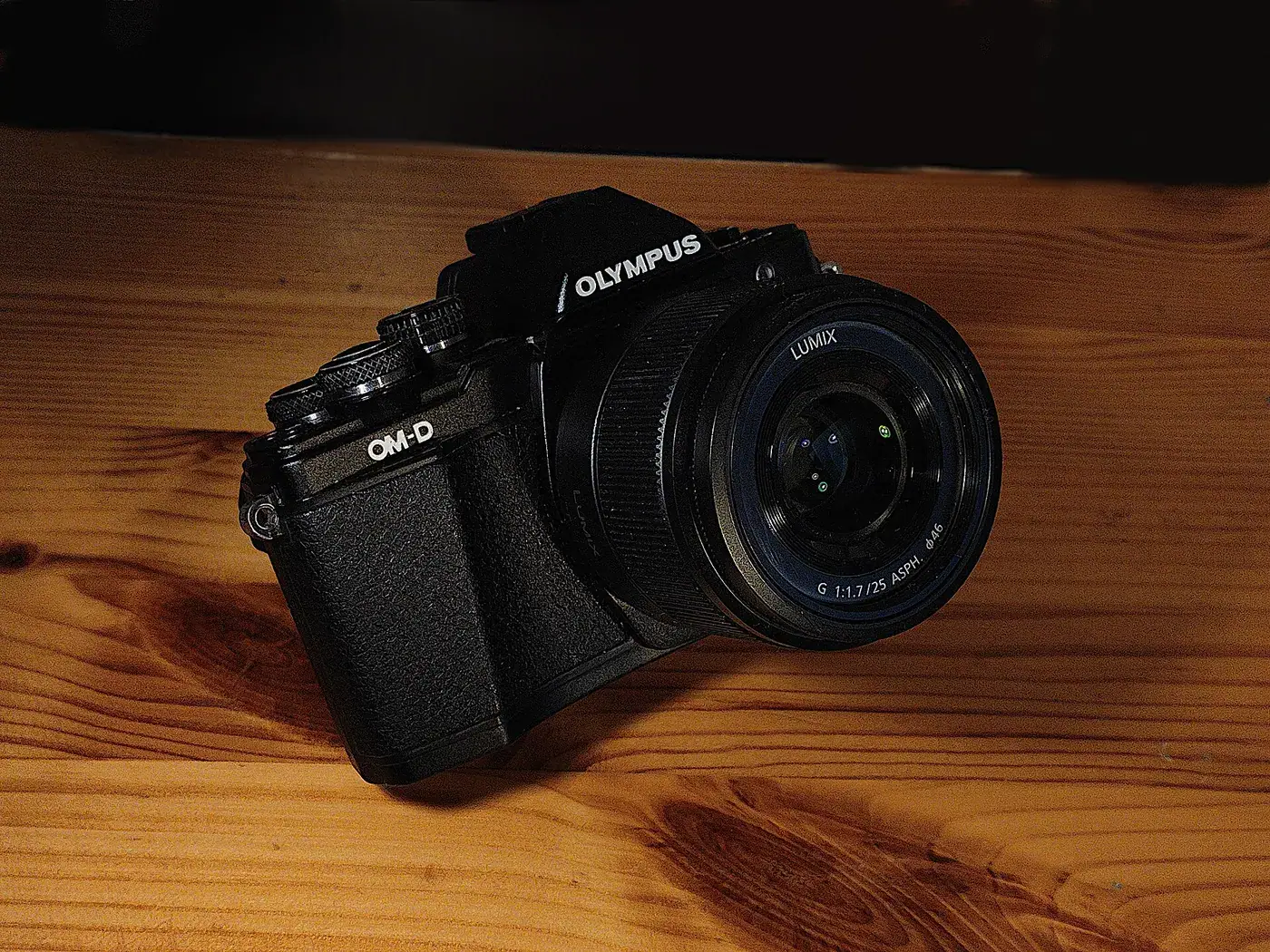
A lens is only a 10-year asset if its mount is still being made. Before buying into a system, count how many lenses the manufacturer currently lists for that mount in the focal lengths you actually use, and how many independent makers also build for it. A mount with three 35 mm options at three price points is a different proposition from one with a single $1,900 lens.
Adapters change this picture but not as much as forum threads suggest. A passive adapter joins an older manual lens to a modern body: you keep the glass and lose autofocus and often the aperture coupling. That is an excellent deal for a $90 manual 50 mm and a poor one for a lens you need to focus on a child running. Adapters for the same manufacturer's older autofocus mount usually keep autofocus but can be slower than a native lens.
The practical test is a shopping list. Write down the three focal lengths you shoot most, price a native lens and a used manual lens for each, and see which mount gets you all three inside the budget. CIPA's own statistics pages publish monthly production and shipment data for interchangeable lenses, which is a useful reminder that the lens market is a separate market from the body market and moves on its own.
| Adapter type | Autofocus | Aperture control | Typical example price |
|---|---|---|---|
| Passive, dumb adapter for a manual lens | None | Manual ring on the lens | $25 to $60 |
| Electronic adapter, same brand's older mount | Usually kept | Kept | $150 to $250 |
| Electronic adapter, third-party mount | Partial, slower | Usually kept | $120 to $400 |
Price bands are examples of what the category costs, not quotes for a named product. A dumb adapter is a machined ring with no electronics, which is why it is the cheapest and the most limited.
Sensor format is a budget decision before it is a picture decision
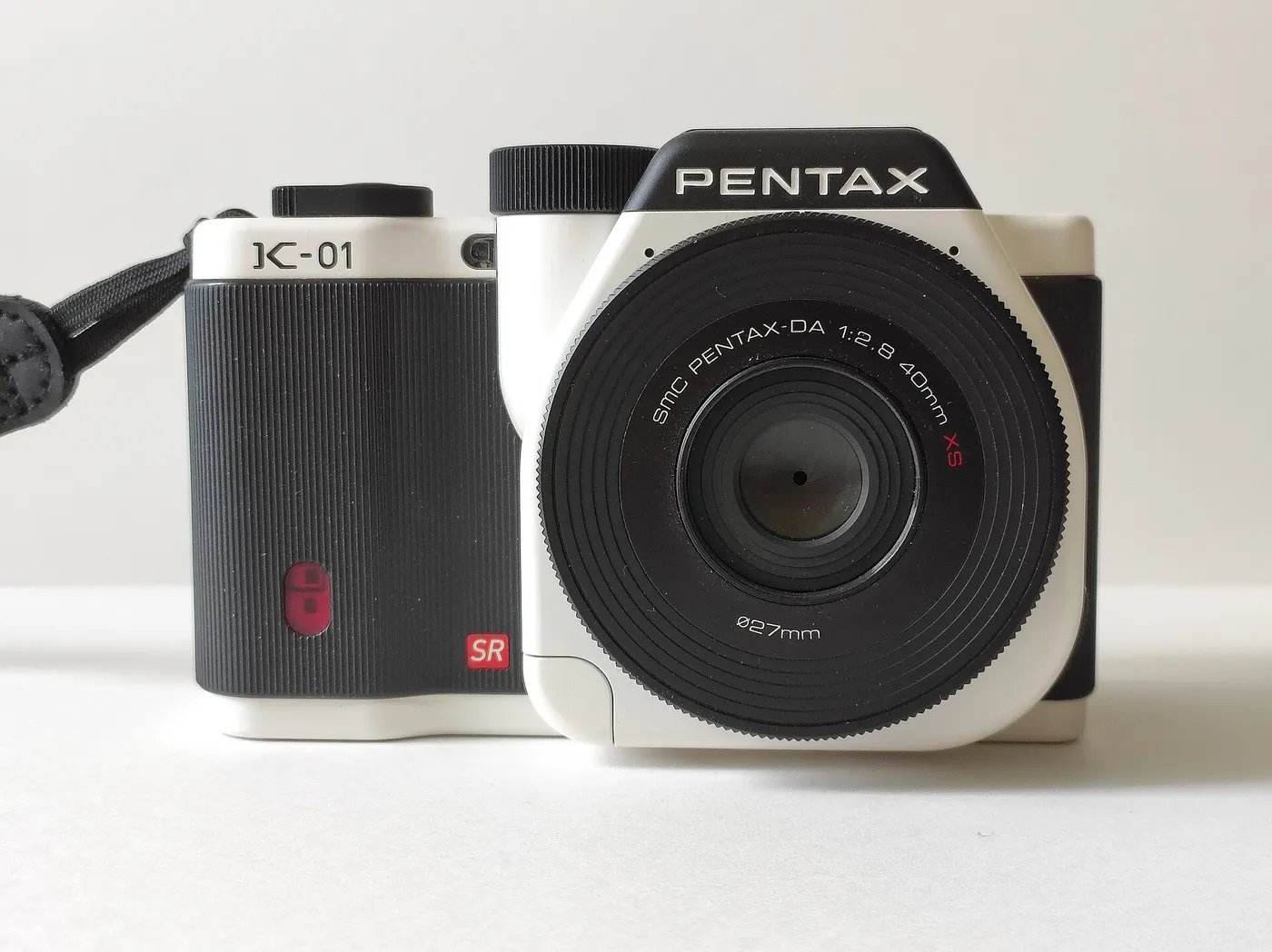
Moving from a smaller format to full frame changes the body price, but it changes the lens prices more, and the lens prices are the ones you pay three or four times. A 50 mm f/1.8 is inexpensive in every mount; the equivalent angle of view with the same depth of field on a smaller sensor is a faster, more expensive lens, and the reverse is true going up.
The honest way to compare is to price a whole kit rather than a body. Take your three focal lengths, price them in both formats, add the body, and divide by the years you expect to keep each piece. A smaller-format kit that costs $2,100 and a full-frame kit that costs $3,800 are 45% apart, and that gap is mostly glass.
Weight belongs in the same calculation, because a kit that stays at home has an infinite cost per picture. If the difference between formats is 900 g in the bag, that is the figure to weigh against the low-light advantage, not the sensor diagonal.
Putting the three numbers together
Run the same three numbers for every option on your list: cost per year, batteries needed for a full day, and how many lenses the mount offers in your focal lengths. On the worked example above, the used body plus prime wins on the first at about $103 a year against $225, and a body-only upgrade only overtakes it when the body you own is genuinely the limit — a broken shutter, no autofocus for your subject, or a sensor format you have outgrown.
If the arithmetic is close, keep the lens and skip the body. Lens money compounds across the next two bodies; body money does not come back.
Before you buy
- Write down how many years you realistically keep a body and a lens, then divide each price by those years before comparing anything
- Look up completed sale prices for the same body and lens to replace the assumed resale figures in the table above
- Divide your usual frame count per outing by the published shots-per-charge figure and buy that many batteries
- Count the lenses currently made for the mount in the two or three focal lengths you shoot most
- Sort a year of your own photographs by focal length before choosing between a zoom and a prime
- Price a complete three-lens kit in each sensor format rather than comparing body prices
Questions readers ask
- Is a used body a false economy?
- Not usually, because the parts that fail are countable. Ask the seller for the shutter count and compare it with the manufacturer's rated life; a body at 30,000 actuations against a 200,000 rating has most of its life left. The real risk is a discontinued battery or a sensor cleaning the maker no longer offers, so check parts availability before the price.
- How many years should I expect a lens to last?
- The glass outlives you; the mechanism decides. A manual-focus lens with a metal helicoid is repairable almost indefinitely, while an autofocus lens with a sealed motor ends when the motor does. The 10 years used in the table above is a planning figure for a modern autofocus lens kept in normal domestic use, not a warranty.
- Does a higher megapixel count justify a new body?
- Only if you crop hard or print large. Going from 24 to 45 megapixels is a 37% gain in linear resolution, which is about one print size. It also multiplies file sizes, so storage and backup costs rise with it. If your pictures are shared at screen size, that upgrade buys nothing visible and costs $225 a year on the example above.
- Should I buy the kit zoom or a prime first?
- Buy whichever covers the focal length your existing pictures already cluster around. Sort a year of your own images by focal length first: if 70% sit between 28 mm and 40 mm, a prime in that range is the upgrade. If they are spread from 24 mm to 200 mm, a zoom keeps you shooting and costs less than three primes.
Sources
- CIPA — list of published standards, including DC-002 battery consumption (2020) and DC-011 image stabilization (2024) — checked 2026-11-03
- CIPA — interchangeable lens production and shipment statistics index — checked 2026-11-03
- CIPA — digital camera production and shipment statistics index — checked 2026-11-03
Some links on this site can earn us a commission. That does not change which product a guide recommends, and it adds nothing to your price. Advertising is not enabled on this site yet. When it is, ads will be labelled and kept visually separate from the guides.